
Sienna Previous Residents by Era
Different sources can identify different parts of a Sienna address history. The County Clerk index is the central recorded-document route, while appraisal records describe the Sienna parcel now and library collections supply older Sienna household leads. A Sienna address history should state whether it supports an owner, a recorded party, or a household finding. That difference is especially important when tracing previous residents through a community that is newer than many Fort Bend record series.
| Source | Years located | Where held | What it can show |
|---|---|---|---|
| County Clerk Permanent Index | 1838 to present; displayed through August 26, 2026 at inspection | Fort Bend County Official Public Records portal | Recorded instrument parties, dates, numbers, and types in a Sienna trail |
| Historic deed record | 1838 to 1886; index 1837 to 1897 | Texas State Library, George Memorial microfilm, and possible FamilySearch images | Early Sienna tract grantor, grantee, and legal-description trail |
| Deed of trust | 1871 to 1887 | Texas State Library reels 1007983 to 1007984 | Sienna tract financing and security instruments |
| FBCAD appraisal data | Current roll with historical values and transfer fields named by the portal | FBCAD eSearch | Current Sienna parcel, situs and mailing fields, values, and transfer links |
| County GIS parcels | Current, with biannual service updates | County ArcGIS and FBCAD map routes | Sienna parcel geometry, subdivision, and layer context |
| Missouri City permits | Current digitized records; historic cutoff not published | MCTX Self Service or records request | Sienna permit, inspection, or code-status dates and summary |
| Rosenberg-Richmond directories | 1962, 1982, and 1986 cataloged | Texas State Library and George Memorial inquiry | Nearby city-level Sienna address leads |
| Federal census | Released under the 72-year rule | Library databases, FamilySearch, and National Archives routes | Historical Sienna-area household relationships and address geography |
| Burial, obituary, and probate material | Collections and access vary by record | Library, County Clerk, Texas State Library, and archives | Sienna family, death, and estate trail endpoints |
Start with the source closest to the date in question. For a recent Sienna transfer, use the parcel and deed index. For an older tract, the legal description may carry farther than the current street line, and microfilm or archives may take over.
Save Sienna Parcel Records
FBCAD eSearch is the starting snapshot before tracing past Sienna residents. Save the owner field for the Sienna parcel, situs address, mailing address, Quick Ref ID, Geographic ID, subdivision, lot or block if shown, and legal description. The appraisal record also names value, taxing-unit, improvement, land-value, historical-roll, and deed-transfer fields. It is valuable for Sienna parcel identity, but it is not title proof and does not identify every person connected with the address.
The situs address is the physical Sienna parcel location. The mailing address is where correspondence goes, and it can be different. Keeping both Sienna fields with the legal description prevents an address history from jumping to a different Sienna parcel when a mailing line, development name, or street formatting changes.
Trace Sienna Deed Records Backward
Fort Bend's deed chain for a Sienna parcel is built from a current Sienna parcel, a likely purchase instrument, and the earlier party named in that instrument. In a deed, the grantor transfers an interest and the grantee receives it. The sequence is strongest when each step retains the same legal description, subdivision, lot or block, acreage, or plat reference rather than relying only on a familiar Sienna street name.
- Use the current FBCAD parcel record to save the owner, Geographic ID or Quick Ref ID, subdivision, legal description, and situs address.
- Search the County Clerk index for the current owner as grantee, then compare the date, instrument type, legal description, and parcel clues.
- Open the likely purchase record when an image is available and record its instrument number, grantor, grantee, filing date, and plat or restriction references.
- Search that grantor as an earlier grantee, checking whether the legal description remains continuous or whether a replat or correction deed bridges the change.
- Repeat backward, then shift to the County Clerk, library, or Texas State Library microfilm when the online route is incomplete.
The Fort Bend permanent grantee index provides the alphabetic browse route used to locate a recipient-side record before applying more criteria.
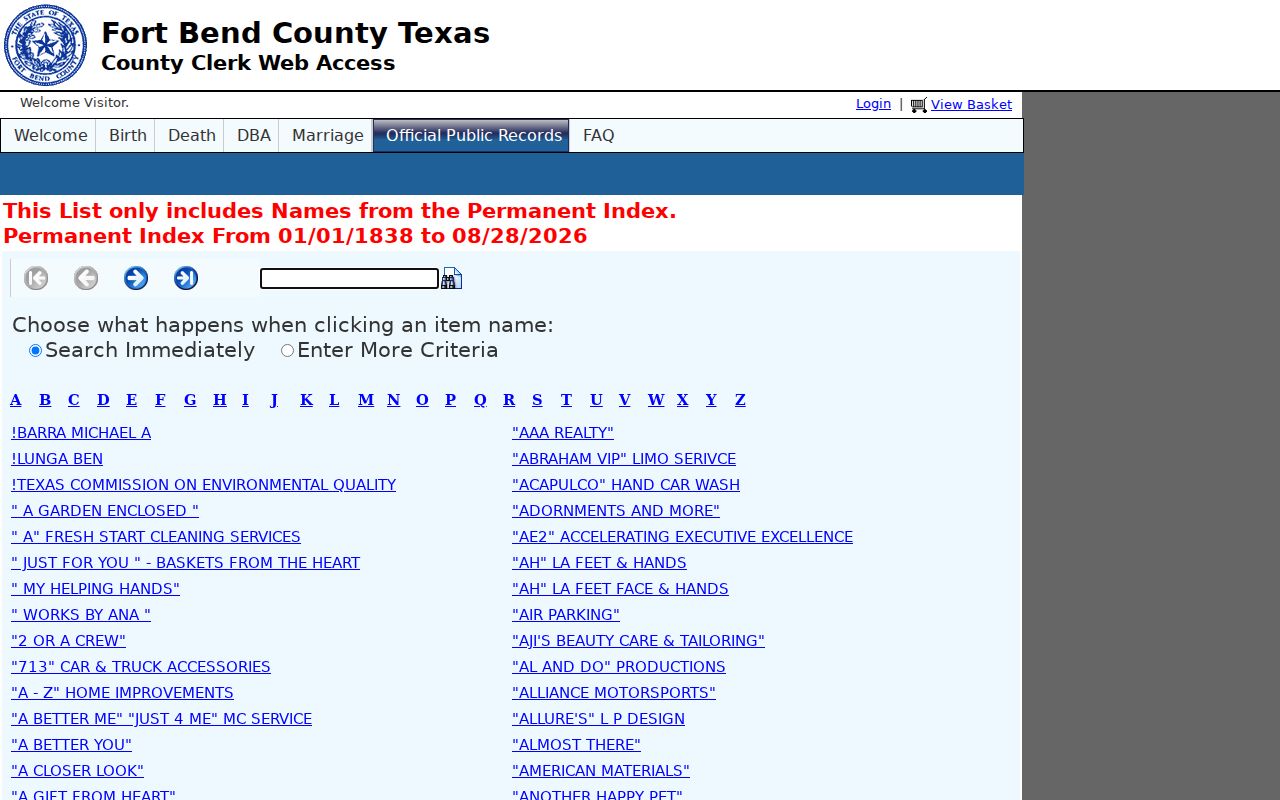
A grantee result in a Sienna trail is a lead to verify against the instrument and parcel identity. It does not by itself establish that a person occupied the Sienna address at every point in the record.
- Grantor
- The party transferring an interest in a recorded instrument.
- Grantee
- The party receiving that interest in the instrument.
- Chain of title
- The documented sequence of transfers for the same parcel or legal description.
- Legal description
- The recorded land identity, often by lot, block, subdivision, or metes and bounds, that can outlast a postal address format.
Sienna Grantor-Grantee Records
The backward move is simple in concept but exacting in practice: the seller or grantor in a Sienna deed should be searched as a potential earlier grantee. Keep the prior instrument number for Sienna and the legal-description match beside the party name. Easements, liens, releases, corrections, and plats may share the same Sienna address or subdivision but are not necessarily the purchase deed needed for the chain.
The Fort Bend permanent grantor index supplies the matching alphabetic seller-side route.
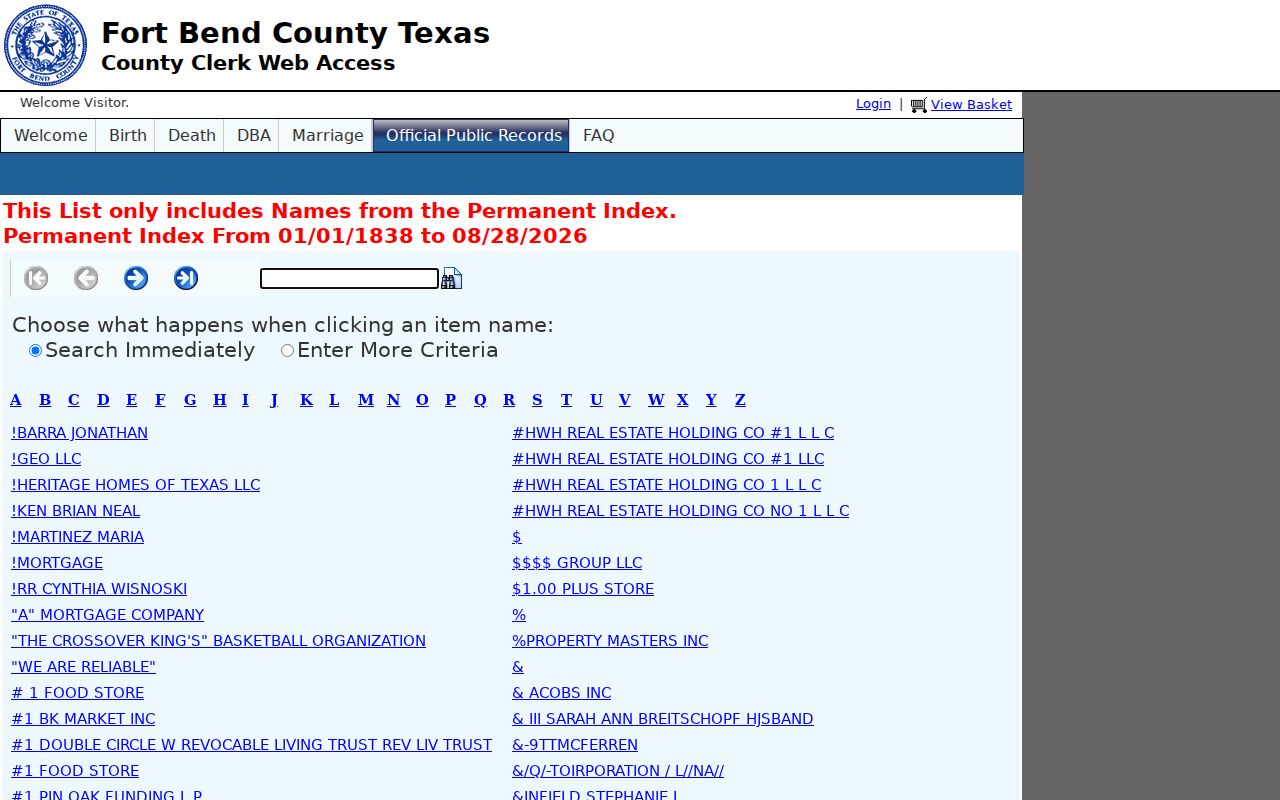
Use the index to narrow a name and then select the appropriate document by its date, type, instrument number, and shared parcel clues. A party name without that comparison can link to the wrong tract.
Sienna Deed Images and Records
The County Clerk Official Public Records portal searches a party name, grantor, grantee, date filed, instrument number, and document type for a Sienna trail. Its search results can offer a View route when an image is available. The county states that the database is not the official repository, printed images carry an unofficial watermark, and backup work can make images for a Sienna instrument unavailable.
Broad OPR searches stop at 500 results. Narrow by name, date range, document type, and instrument number, then include the instrument number in a copy request. The County Clerk's published fee guidance lists plain copies at $1 per page and certified copies at $1 per page plus a $5 certification charge. An index entry locates a deed; an image or certified copy is the document evidence.
Note: Record the search date and image availability because the dynamic portal can change during a later visit.
Sienna Microfilm and Court Records
The Texas State Library Fort Bend microfilm guide is the bridge when an old Sienna tract reaches early Fort Bend county books. It lists deed records for a Sienna trail from 1838 to 1886 with an 1837 to 1897 index, deed-of-trust records from 1871 to 1887, probate from 1838 to 1877, tax rolls through 1910, and several court and naturalization series. George Memorial can help identify a suitable local-history route for a Sienna tract before a trip or request.
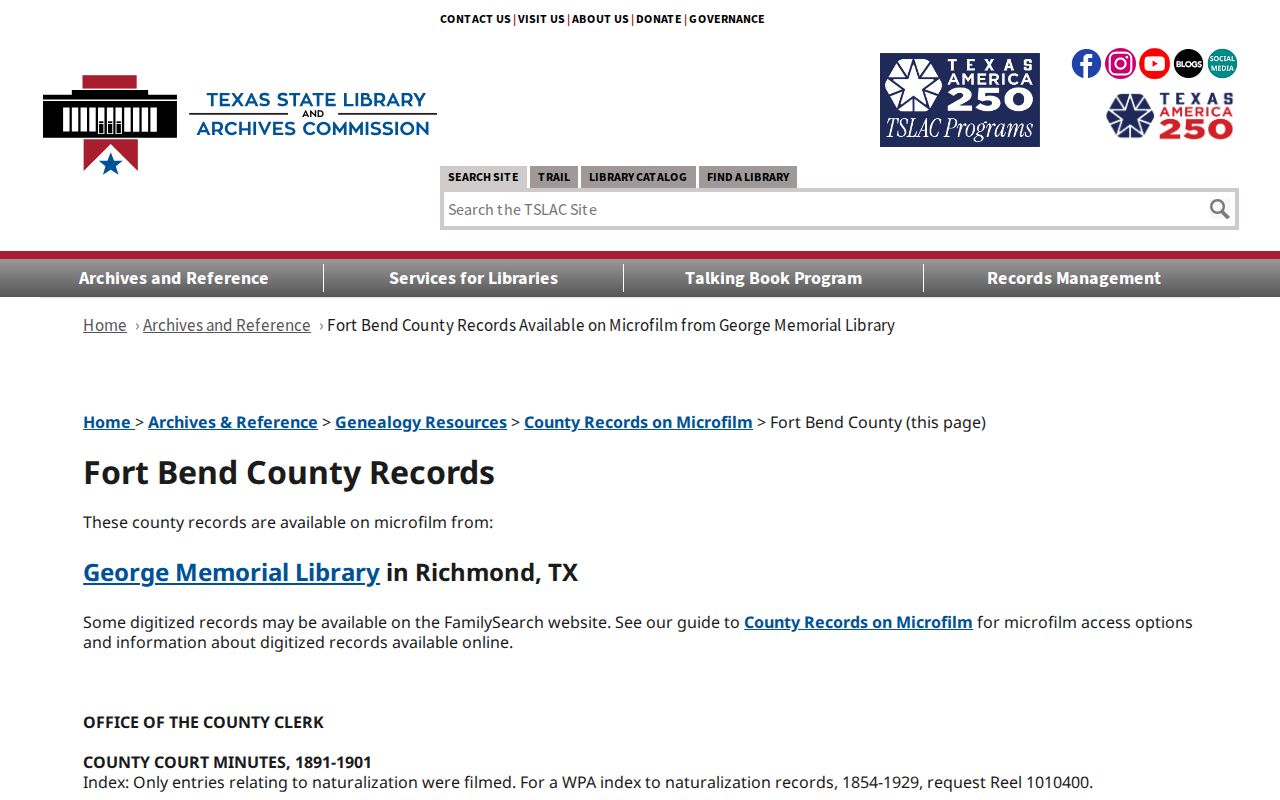
Microfilm is not a failed online Sienna search. It is the documented access channel for early deed, deed-of-trust, probate, court-minute, naturalization, and tax material in a Sienna trail that cannot be reduced to a modern address query.
The Fort Bend District Clerk historical-records page describes historic criminal, civil, and family indexes and minute books from 1821 to 1980.
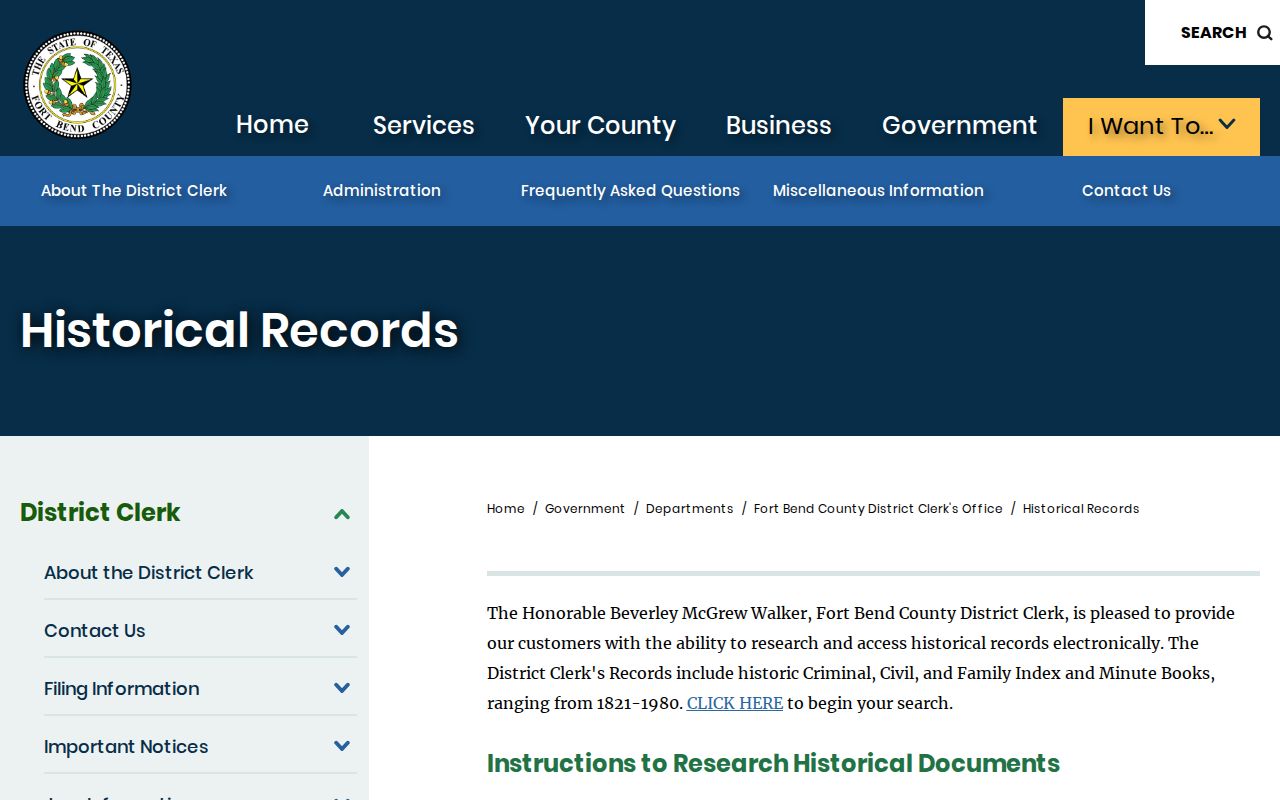
Historic court material can supply an estate, case, or land context, but public availability remains subject to confidentiality, redaction, account, purchase, or office-access rules.
Known Gaps in Sienna Records
A broken Sienna trail can be an archival fact. The state guide warns of missing pages in Deed Record Volume D and duplicate or transcription issues in Volume F. The commissioners-court archive also identifies a missing Book B for 1869 to 1881. These issues can affect a Sienna trail and are reasons to preserve a gap note, then pivot to deeds, tax rolls, newspapers, district minutes, probate, or Historical Commission material rather than invent a link in the chain.
Kofile QuickLink provides a remote historic index with record type, year, party, last-name initial, first-name initial, book, volume, and page routes. The historic room is searchable around the clock, but a document purchase requires account setup.
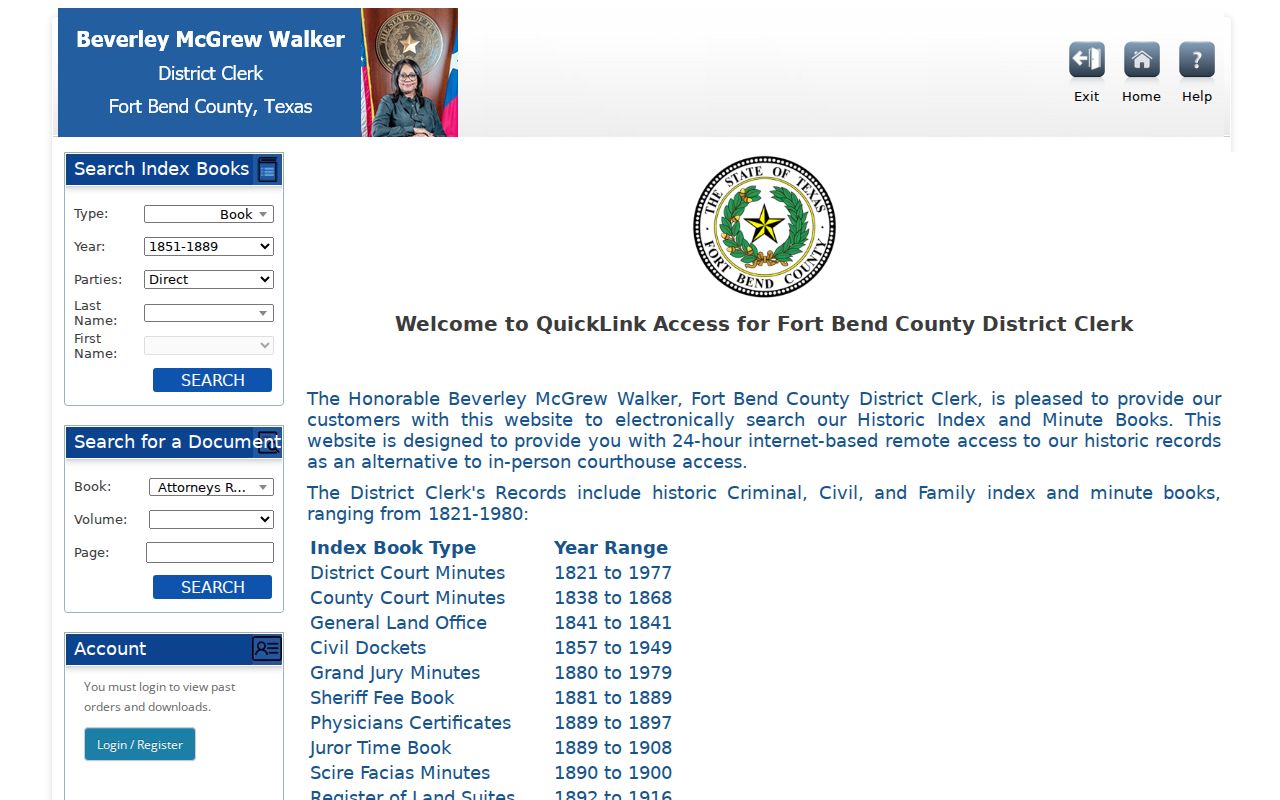
Kofile is a finding aid and access route, not proof that every historic record will be one-click available. Keep its book, volume, page, and source status in the research log when the trail moves beyond modern index results.
Sienna Households in Directories
A Sienna deed chain tracks recorded interests, while directories and census schedules can add a Sienna household layer for the appropriate historical era. No dedicated official Sienna city-directory run was located, and Sienna is modern. The documented alternatives are Rosenberg-Richmond directory years, county newspapers, deeds, census schedules, cemeteries, and nearby archival sources. Do not label a nearby directory as a historic Sienna volume.
- Choose a deed or parcel date that anchors the address history.
- Ask for an address-ordered, telephone, Rosenberg-Richmond, or Houston-area directory that is close to that date.
- Read the directory key and record its year, publisher, page, printed address, and any status notation without assuming a same-name match.
- Pair the nearest released census year with the directory window, then use newspaper, burial, obituary, probate, or deed material to test the household trail.
The catalog and collection context are kept with the Sienna Directory Book. The 72-year census release rule means current household information is not supplied by a recent census schedule.
Sienna House History Records
George Memorial's genealogy and local-history service is the useful human handoff for a former Sienna household trail. Its resources include a volunteer burial database, microfilm readers, local and regional reference, census and genealogy material for a Sienna trail, and licensed databases. The library describes Newspapers.com Texas Edition coverage from 1842 through 2024 for Sienna in-library research.
No standalone local house-history guide was located. The practical service is distributed among George Memorial, the County Clerk, the Texas State Library guide, the Historical Commission, and the official record portals. Bring the current address, legal description, subdivision, date range, and known instrument number instead of asking for an open-ended name search.
Limits on Sienna Previous Residents
Sienna previous residents research can identify the owner shown for a Sienna parcel, a deed party, a historical directory lead, or a released census household. It cannot prove every person who stayed at a Sienna address, defeat a protected-address program, or turn a missing record into evidence that someone was absent. Keep living people's information to the minimum needed for lawful personal research and confirm important Sienna facts with the office that holds the record.
Lawful use. Use Sienna address history for family history, estate and heir research, property history, or civic context. Do not use a former-address trail to stalk, harass, intimidate, or harm any person.
When a custodian has a responsive existing record outside the normal portal, a focused Texas Public Information Act request can identify the address or parcel, record type, date range, and desired nonconfidential attachment. The Act is Texas Government Code chapter 552, and redactions or access limits may still apply.