
Sienna City Directory Collections
No official catalog examined for Fort Bend County identifies a dedicated Sienna city-directory run. That is an important result, not a missing search step. Sienna is a modern planned community, and older names and addresses are more likely to appear under Richmond, Rosenberg, a county tract, or a later subdivision. The practical historical shelf joins nearby printed directories to George Memorial Library, county deeds, census schedules, and newspaper files. Start with the collection that matches the date, then preserve the volume, page, publisher, and the abbreviation key with every result.
| Collection | Years | Where Held | Access |
|---|---|---|---|
| Rosenberg-Richmond volumes | 1962, 1982, 1986 | Texas State Library catalog; ask George Memorial about local access | Sienna-adjacent catalog and library inquiry |
| Portal to Texas History collection | 361 items across 137 years | Portal to Texas History | Digitized browse and image search; no Sienna item located |
| Fort Bend newspapers | 1842-2024 coverage described | Fort Bend Libraries genealogy databases | In-library Sienna historical research |
| County deed and probate microfilm | Early Fort Bend runs | Texas State Library guide and George Memorial | Sienna land-trail microfilm, books, or staff help |
The county's older material adds the bridge a printed volume cannot supply. The Texas State Library Fort Bend guide lists deed records from 1838-1886, a deed index from 1837-1897, probate volumes from 1838-1877, tax rolls from 1838-1910, and other reels. Those are records of land, probate, or taxes, not substitute Sienna directories.
The Portal to Texas History city-directory collection shows the digitized collection route, although its inspected browse did not reveal a Sienna-specific run.
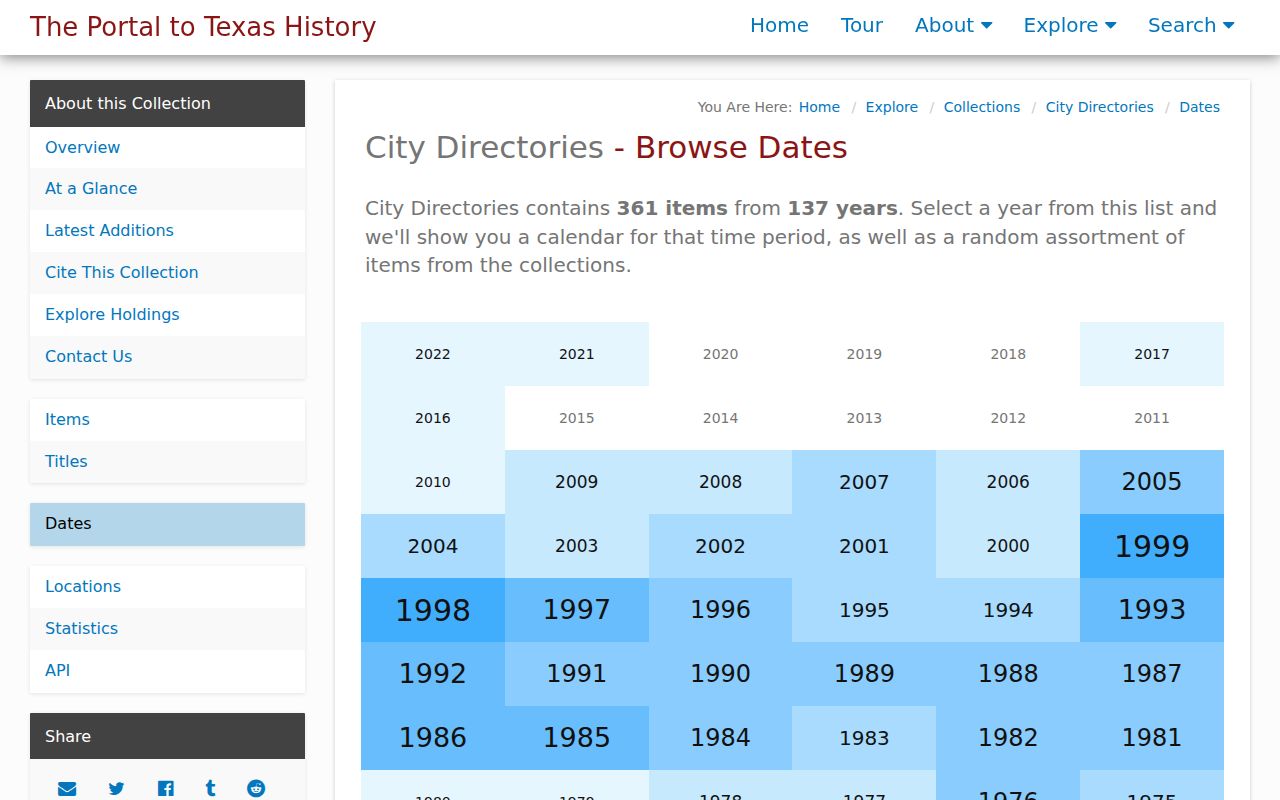
Its broad collection is useful for learning how a published directory is organized, while a Sienna search still needs nearby localities and county sources.
Sienna Historical Collection Gaps
A blank historical directory search does not establish that a person or address was absent. The official research found no separate Sienna series and no official catalog entry for a dedicated Sienna criss-cross directory. A Sienna researcher should ask the George Memorial service desk about Rosenberg-Richmond, Houston-area address directories, telephone books, and microfilm before concluding that address-ordered material does not exist. The library's local-history room has microfilm readers and printers, burial resources, local and regional reference works, and licensed databases that are not all available from home.
For an earlier Sienna parcel, use the legal description, lot and block, or tract name to connect it to Richmond or Rosenberg context. A printed Sienna street line may have changed as land was platted or a community expanded. Comparing the subdivision, cross streets, and parcel map is safer than assuming an old street name describes the same place now. Note: A directory is a dated publication, so an omitted name can reflect coverage, spelling, or publication practice rather than a definite move.
Sienna Rosenberg-Richmond Directory Years
The Texas State Library city-directory catalog files Richmond under the Rosenberg-Richmond cross-reference and identifies 1962, 1982, and 1986. These are the documented nearby directory years, not a claim that they cover every Sienna address. They can nevertheless help trace a Sienna family, business affiliation, or older regional address when the historical question predates Sienna's modern village pattern. Record the locality printed on the title page rather than relabeling the result as Sienna.
Use the library catalog as a request tool for Sienna research. A Sienna researcher can ask whether a copy is available locally, which format is available, and whether nearby telephone or address directories fill a gap. The Fort Bend County Historical Commission also holds documents, photographs, maps, cemetery, court, deed, will, marriage/death, census, family-history, and newspaper categories, but its dynamic archive search may require an inquiry or visit.
The state library catalog is the source for the documented Richmond directory years.
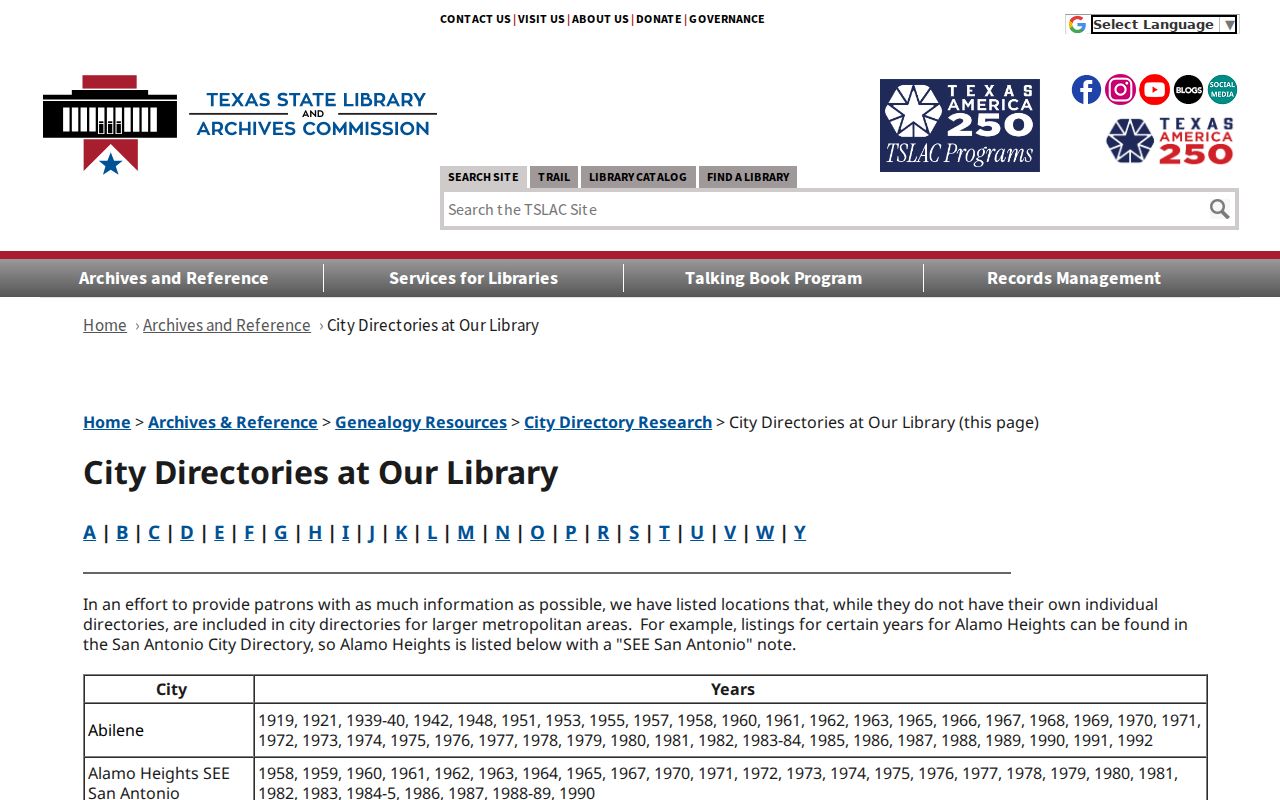
The catalog view supports a nearby-locality search strategy instead of inventing a printed Sienna series.
Sienna City Directory Entry Fields
Read a printed Sienna-area entry as a publisher's compact record, not as a modern profile. The Library of Congress explains that historical volumes are often surname ordered and can also be arranged by address or telephone. A printed entry may include a name, spouse or household notation, profession or business affiliation, street address, owner or occupancy notation, and widow or other status notation. The actual mix depends on the year and publisher. A real Sienna research entry should always be cited with its directory year, publisher, page, and the key used to interpret abbreviations.
| Printed name | Capture the surname and given-name form exactly as printed. |
|---|---|
| Household notation | Keep any spouse, widow, or status notation as a transcription, not an assumption. |
| Profession or affiliation | Record it only when the volume prints it and preserve the wording. |
| Street line | Compare the address with locality, year, and nearby street context. |
| Occupancy mark | Interpret owner or occupancy abbreviations from that volume's own key. |
| Citation details | Save the year, publisher, page, and source image or shelf reference. |
- Criss-cross directory
- An address- or telephone-ordered directory section that can provide an address-to-name lead when a volume includes one.
- Householder index
- An index organized around the household name or address rather than a full census of everyone present.
- Abbreviation key
- The publisher's explanation of shortened labels and marks, usually found in the volume's front matter.
Do not assign meaning to a mark until the key is visible. The research did not reach a public Sienna or Rosenberg-Richmond entry image to transcribe, so a Sienna research note should capture fields from an actual volume, not a recreated example.
Sienna Reverse Address Searches
Reverse access reverses the ordinary surname-first method. When a volume has an address or telephone arrangement, search the Sienna-area street line, then read the publisher's key before copying the associated name. That can provide a historical lead for an address, but it does not prove every person in a Sienna household or a continuous occupancy. Nearby runs may be the only available route for a pre-Sienna search, and the official local catalogs do not confirm a separate Sienna criss-cross series.
The Library of Congress guide to city and telephone directories explains the surname, address, and telephone arrangements researchers may encounter.
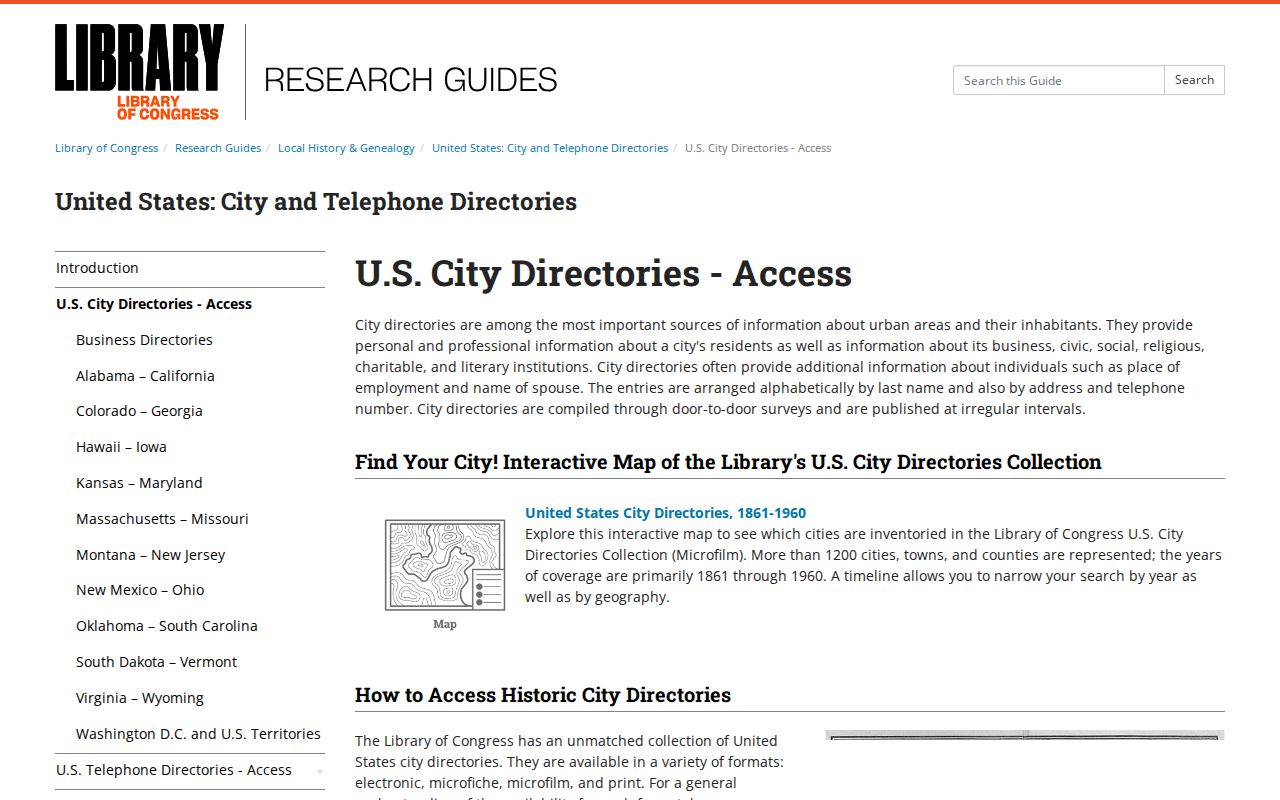
The guide helps distinguish an address-ordered lead from a name-ordered listing before a Sienna historical search is expanded.
George Memorial and Sienna Families
George Memorial Library is the strongest local handoff for Sienna family-history work. Its genealogy and local-history room combines a Fort Bend burial database, microfilm resources, census and genealogy material, and staff assistance with local collections. The library identifies the room at 1001 Golfview Drive in Richmond and lists 281-341-2608 with second-floor hours. The nearby Sienna Branch is a useful library touchpoint, while the specialized genealogy concentration is at George Memorial. A question to Sienna-area library staff can be more productive than repeating the same online search when the needed source is in-library only.
Fort Bend Libraries describes Newspapers.com Texas Edition as in-library with Texas coverage from 1842 through 2024. It also points Sienna researchers to Texas Digital Sanborn Maps, FamilySearch, Ancestry Library Edition, Chronicling America, and other genealogy routes. Sienna burial research uses volunteer-compiled records, so use a cemetery, certificate, probate file, or county record to verify a fact that matters.
The Fort Bend Libraries genealogy databases identify the in-library newspaper, map, and family-history resources.
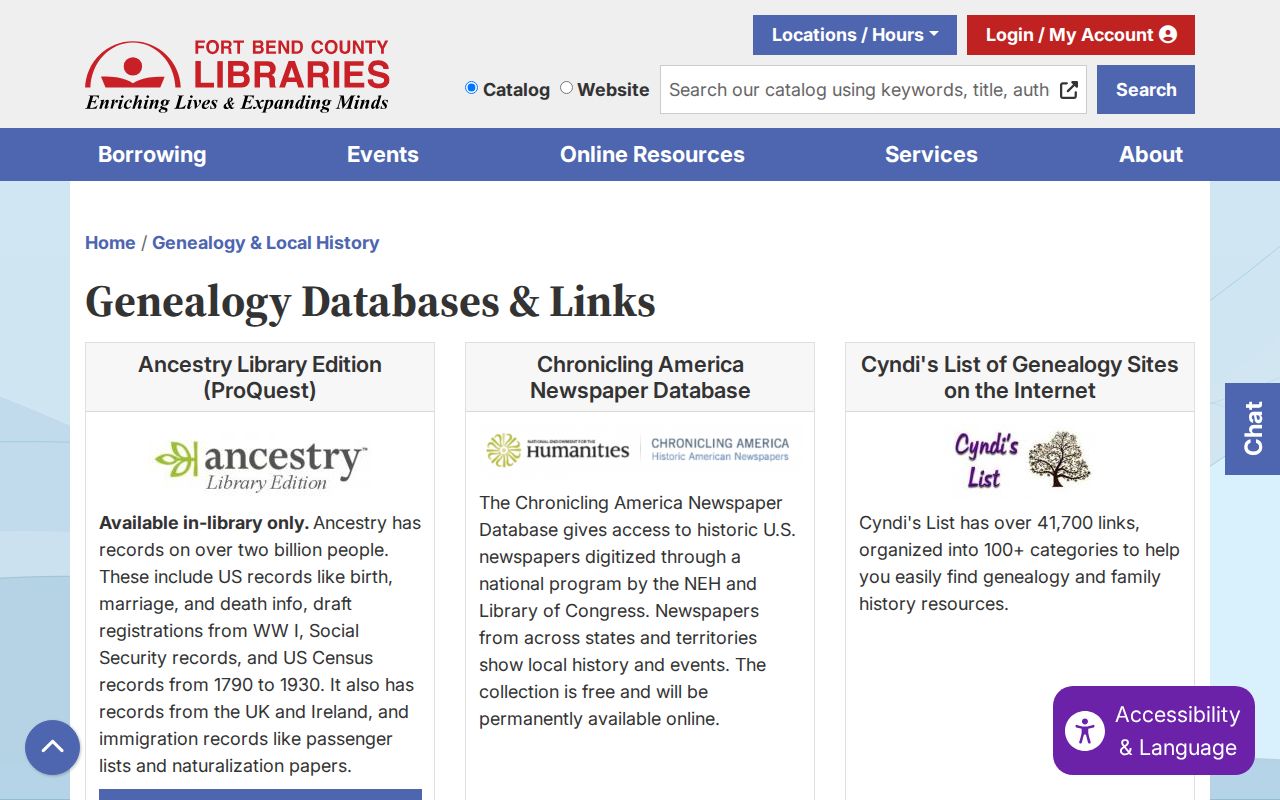
Those database listings show why a directory lead can continue through newspapers, maps, census material, and microfilm at the library.
Sienna City Directories With Census
Sienna household tracing works best as a sequence of dated evidence. Begin with the nearest printed year and exact spelling. Repeat the Sienna-area search in the next available directory year, then place the result beside the federal census release that is available for the period. Census material can add relationships, ages, birthplace, and household context. Newspapers can then supply notices or obituaries between the published directory years. County deeds and tax records help establish a Sienna land trail, but they do not name every person who lived at an address.
- Start with the first nearby directory year that fits the Sienna name, address, or regional locality.
- Copy the Sienna-area entry exactly and save its page, publisher, abbreviation key, and date.
- Check the nearest earlier and later available volumes for Sienna address, spelling, or household changes.
- Pair each usable Sienna interval with released census material and compare relationships rather than relying on surname alone.
- Use newspaper, burial, probate, deed, or cemetery sources to test a Sienna move, death, or ownership change.
For a name found in a historic directory, a modern parcel question belongs with the Sienna street directory workflow rather than with the old printed volume. Keep old and current evidence in separate columns so an historical address is not silently treated as a current one.
Newspapers Between Sienna Directory Years
Sienna directories are spaced snapshots. Fort Bend newspapers can supply legal notices, social columns, obituaries, and other dated Sienna name clues in the intervals between them. The library's in-library Texas newspaper coverage is described as 1842-2024, and its local-history resources include burial and cemetery research. Search with a surname, spouse name, Sienna village or nearby locality, and a date window. A newspaper notice is a lead that should be checked against the relevant county, cemetery, probate, or state record when precision is important.
The 2026 library genealogy programming and local-history access information also makes the staffed room a practical Sienna alternative when a digitized catalogue stops short. Note: A licensed newspaper database may be available only inside the library, even when the library's collection description is public.
Sienna Directory Geography and Maps
Richmond maps are valuable Sienna context, but they do not map modern Sienna parcels. The Library of Congress provides Richmond Sanborn sheets from April 1899 and April 1914, while Sienna is a later development. Use those sheets to understand the older nearby town, building footprints, street names, and landmarks. Use Sienna plats, FBCAD, county GIS, and recorded legal descriptions for a Sienna parcel. That division protects a family-history search from attaching nineteenth-century Richmond map evidence to a later Sienna address.
Sienna's named villages can help bridge modern Sienna materials. Anderson Springs, Avalon, Bees Creek, Shipman's Landing, Steep Bank East, Steep Bank West, Waters Lake, Sawmill Lake, Sienna Oaks, Summerlake House, and Rosewood appear in Sienna association materials. They are useful Sienna terms for declarations, plats, and public association documents, not proof that a named person belongs to a household or association.
Sienna Records Before Directories
The Fort Bend record trail behind Sienna is older than the community name. The county was organized in 1837, and the County Clerk's online permanent real-estate index begins in 1838. Texas State Library microfilm, Kofile historic materials, county books, and Historical Commission collections handle different parts of the earlier Fort Bend trail. Sienna historic work requires patience because the records were migrated in layers rather than in one documented digital cutover. An index can point to an instrument while a microfilm reel, book, account, purchase, or office inquiry is needed for the image.
Known Sienna gaps should be retained in the research notes: Deed Record Volume D has missing pages, Volume F has duplicate or transcription concerns, and the commissioners-court archive identifies missing Book B for 1869-1881. A missing Sienna directory result may therefore be one part of a broader archival gap. Mark each finding as an index lead, image viewed, certified copy, transcription, or archival reference before using it in a family record.