
Sienna Resident Lookup Sources
Match the record to the question you are actually asking. For a Sienna parcel, the Fort Bend Central Appraisal District identifies the listed owner. It also shows the parcel's mailing and situs addresses. For a recorded instrument tied to a Sienna name, the County Clerk's Official Public Records index is the right shelf. Each system answers only part of the puzzle. A voter confirmation, a court case, or a vital index can corroborate a specific event. Each one speaks to a moment involving a resident. None of them produces a complete roster of everyone at an address. Sienna also crosses community, postal, and service boundaries. Confirm the actual Fort Bend County parcel before matching two similar results. Confirm the full address string before deciding they belong to one person.
| Record | What It Confirms | Where | Access |
|---|---|---|---|
| Appraisal roll | Sienna owner shown, parcel identity, situs and mailing details | FBCAD eSearch | Public search |
| Recorded instruments | Sienna grantor, grantee, instrument date and number | Fort Bend County Clerk OPR | Public index; copies vary |
| Registration confirmation | Limited Sienna registration information | Fort Bend voter inquiry | Statute-limited |
| County case index | Whether a public Sienna case trail exists | Tyler Odyssey | Public portions |
| Vital summary index | A Sienna event lead, not a certified record | Texas DSHS | Index and eligibility rules differ |
Pick your starting point with care. A known address makes the current Sienna parcel the natural first stop. A court or event lead calls for an exact name plus a date range. The County Clerk public-record gateway also opens local vital, marriage, and assumed-name routes. A name in one of those systems describes a filing role. It may not describe an event. It does not automatically confirm a present Sienna address. Visit the Fort Bend County Clerk public-record gateway to begin a record search directly.
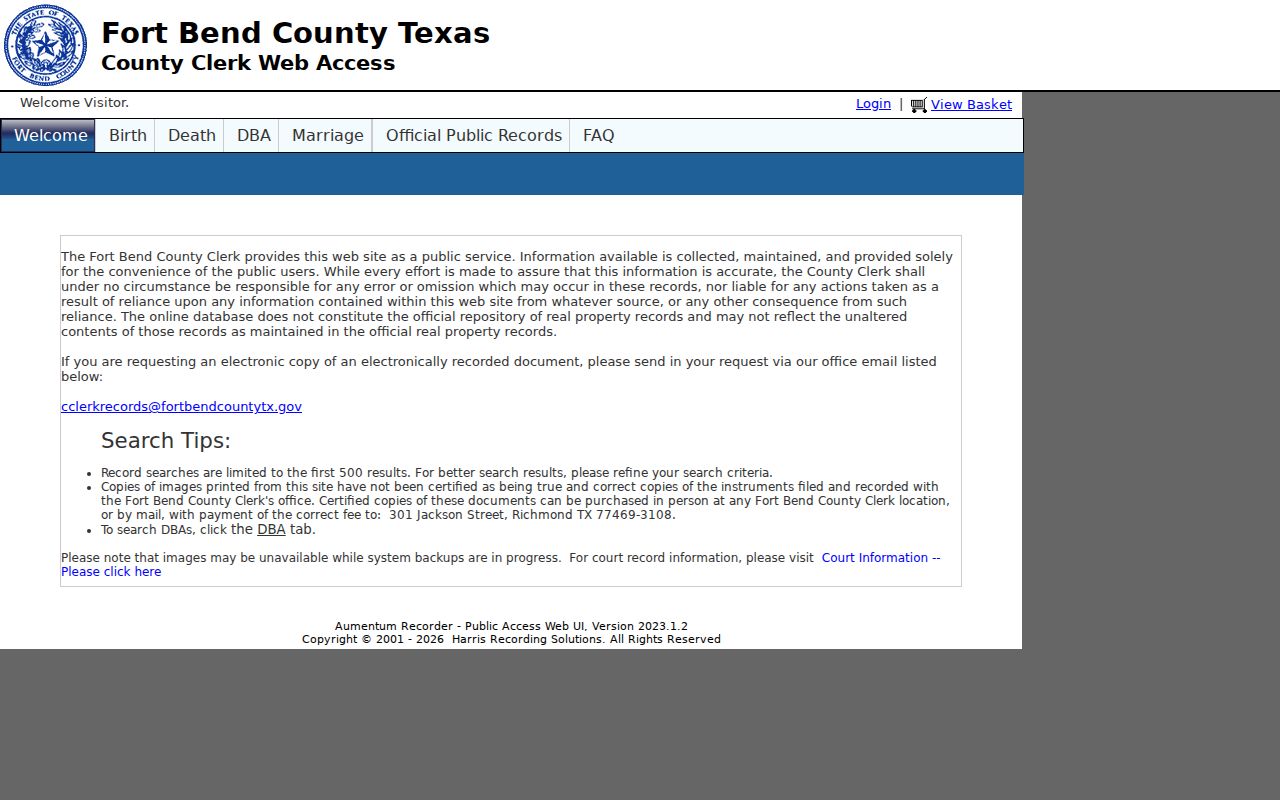
The gateway hands off several distinct County Clerk record types. Select the right Sienna record category before reading any meaning into a name hit.
Anchor a Sienna Name to Address
An address anchor is the cleanest way to separate people who share a name. FBCAD eSearch accepts an owner name, street number, street name, Quick Ref ID, subdivision, neighborhood, Geographic ID, tax year, and other advanced fields. The Quick Ref ID is the fastest exact route. Use it whenever it appears on a Sienna appraisal notice or tax bill. Not every address search behaves. FBCAD advises simplifying to the street name alone, street plus number, or no street type at all. Owner searches can be just as finicky. Try a single name, or spacing variants such as McDonald and Mc Donald, before giving up on a Sienna lead.
| FBCAD field | Practical use in a resident lookup |
|---|---|
| Owner Name | Find the current or recorded Sienna owner-name result. |
| Street Number and Street Name | Narrow a search to the Sienna physical parcel. |
| Quick Ref ID | Open the fastest exact Sienna property route when known. |
| Subdivision or Neighborhood | Distinguish a Sienna village or development area. |
| Geographic ID | Preserve the Sienna parcel or legal-geography reference. |
| Tax Year | Keep the Sienna result tied to the applicable roll year. |
Know which address you are reading. The Sienna owner mailing address may differ from the situs address, which is the parcel's physical location. A homestead indicator, where shown, supports an owner-occupancy inference. It still cannot identify every household member. Write down the exact query, the result date, the subdivision, and the parcel identifier. Those notes make your next comparison reproducible. They do not turn an appraisal entry into a claim about an entire Sienna household.
Note: FBCAD values are appraisal evidence, while a recorded instrument is the better source for a transfer or ownership history.
Sienna Court Record Trails
For a public Fort Bend County case lead, Tyler Odyssey public access offers search routes. The routes include Case Number, Party Name, Attorney, and filing date. Clicking a blue case number opens the available case detail. The Register of Actions can hold Sienna party information. It may also list events, orders, and financial information where public. County instructions describe civil and misdemeanor coverage from 1983 forward. Probate coverage runs from 1987 forward. Those coverage statements do not make every document public. The current result screen may omit sealed or protected material. It may also omit juvenile, expunged, or redacted material tied to a Sienna party.
- Case number: the court's identifier for a Sienna matter.
- Case type and filing date: the Sienna matter category and its filing point.
- Party names and roles: the names attached to the public Sienna case entry.
- Attorney entries: counsel shown in the available Sienna record.
- Events and orders: dated Sienna docket activity where public.
- Financial entries: available public Sienna financial information, when permitted.
Older District Clerk material lives on a separate system. Kofile QuickLink searches historic records by type, year, party, last-name initial, and first-name initial. Book, volume, and page lookups work there too. The historic collections span series from 1821 through 1980, depending on the record group. A Sienna index finding may still require an account, a purchase, clerk assistance, or an in-person visit to reach an image. Verify any court name match against the case number, county, date, and disposition. Only then attribute it to a Sienna resident. For a statewide angle, Texas re:SearchTX provides the statewide court-search interface.
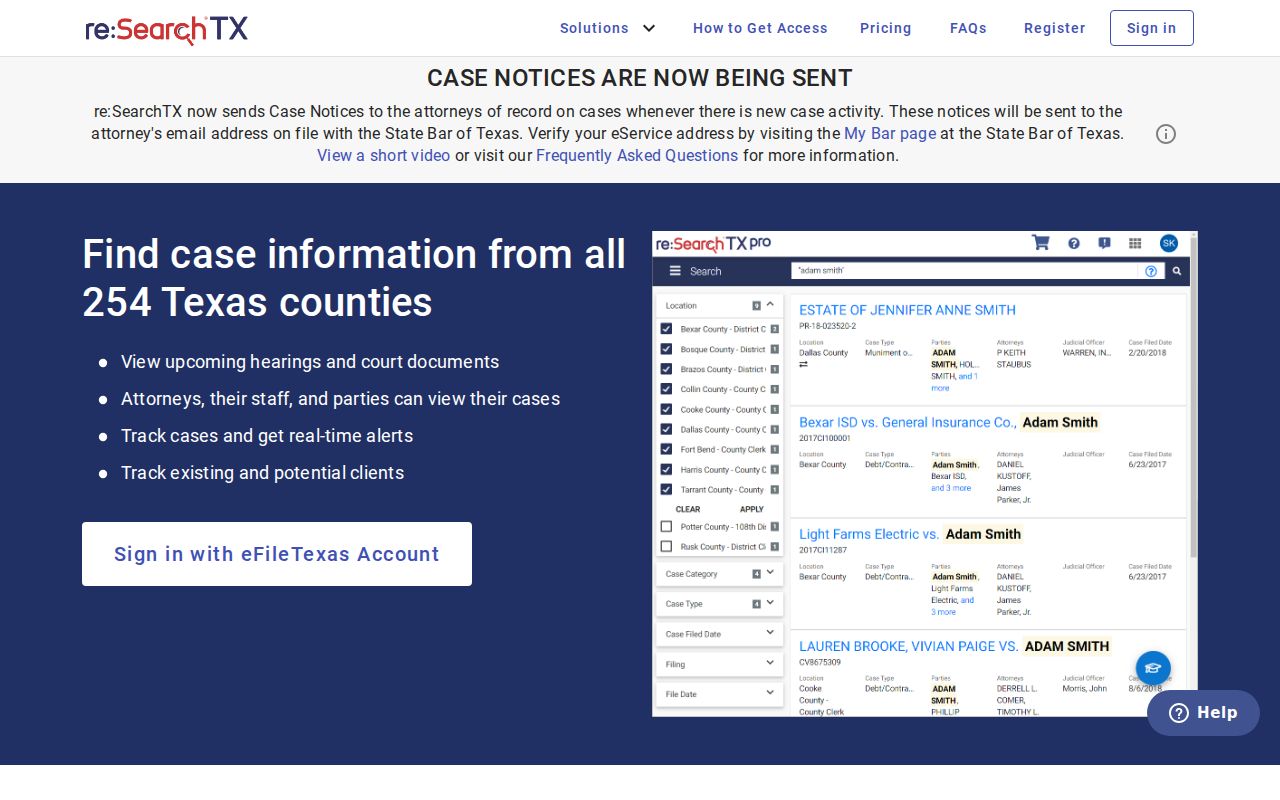
Texas re:SearchTX adds statewide electronic case-search options for a Sienna lead. It supplements, but never replaces, the Fort Bend County systems and their distinct coverage.
Sienna Vital Record Leads
Texas keeps two tiers of Sienna vital information. A public Sienna index is open to anyone, while a certified Sienna vital record goes only to qualified requesters. State law sets the dividing line: under Texas Government Code section 552.115, a Sienna birth record becomes public after 75 years and a Sienna death record after 25. The DSHS summary indexes carry only basic Sienna event fields. They are not certified long-form records. Digital birth index coverage begins in 1925 and death coverage in 1965, with earlier microfiche reaching back to 1903. When scanning either index, compare the full set of Sienna fields: name, event date, county, and sex. A surname alone will mislead you.
Local filings follow a different path. The Fort Bend County Clerk issues qualified Sienna birth and death copies for events filed locally. Online ordering runs through VitalChek. A Sienna mail request needs the form, a sworn notarized statement, an ID copy, and a cashier's check or money order. In-person service is available at the Sienna Annex. Marriage licenses come from the County Clerk. Divorce decrees come from the District Clerk. DSHS marriage and divorce verification only confirms that an event occurred. It does not return the license or decree itself. The state marriage index starts in 1966 and the divorce index in 1968, and availability shifts by year.
A lead gets stronger when its county, date, and associated name line up with an independent parcel or case trail. Restricted copies stay limited to eligible requesters, even where a public index can be inspected freely.
Verify a Sienna Resident Match
Verification is about agreement among independent facts, not sheer volume of fields. Line up middle initials, prior addresses, a Sienna subdivision, an age or event date. Add any spouse or entity references that appear publicly. Instrument sequence and county matter too. Keep the source's role and date in mind before concluding anything. A Sienna name can surface as grantor, grantee, agent, court party, credential holder, or obituary subject. That does not mean the person ever lived at the Sienna address in question.
- Use FBCAD to record the Sienna address, parcel identifier, and owner or mailing field shown for the relevant roll.
- Search Tyler Odyssey with the Sienna name and reasonable variants, then retain the case number, filing date, role, and public status rather than a name alone.
- Compare an eligible DSHS or County Clerk Sienna event index with the same county and date range, keeping in mind that an index is only a lead.
- Request a plain, certified, or electronic Sienna copy from the custodian only when the exact document is needed, and preserve the record number and redaction status.
- Docket
- A dated list of events and orders in a court case, not a full biography of a person.
- Index versus image
- An index points to a filing; an image is the document view and can have access, fee, or redaction limits.
- Certified copy
- A custodian-issued copy carrying the certification required for the official record purpose at hand.
Keep a narrow source log. Record the URL, access date, terms searched, record number, result date, and fields relied on, plus any redactions. That lean trail lets you correct a mix-up later without copying unnecessary personal details.
Sienna License and Entity Roles
Sienna business and credential tools can corroborate a public affiliation. They are not residence records. The SOS business search answers questions about a Sienna entity, registered agent, officer or director, member or manager, general partner, and filing history. Its filings show formation, status, agent, governing person, addresses, and document history, subject to redaction. A registered-agent or Sienna business address should never be recast as a Sienna home address.
For credentials, the state verification hub offers official license and enforcement search paths. The educator certificate route takes a first and last name and can show current, expired, or inactive status where applicable. These searches establish a license or filing role. They do not establish current residence, household membership, or identity without independent records backing them up.
Check the Texas Department of Licensing and Regulation verification page for official license status before relying on any result.
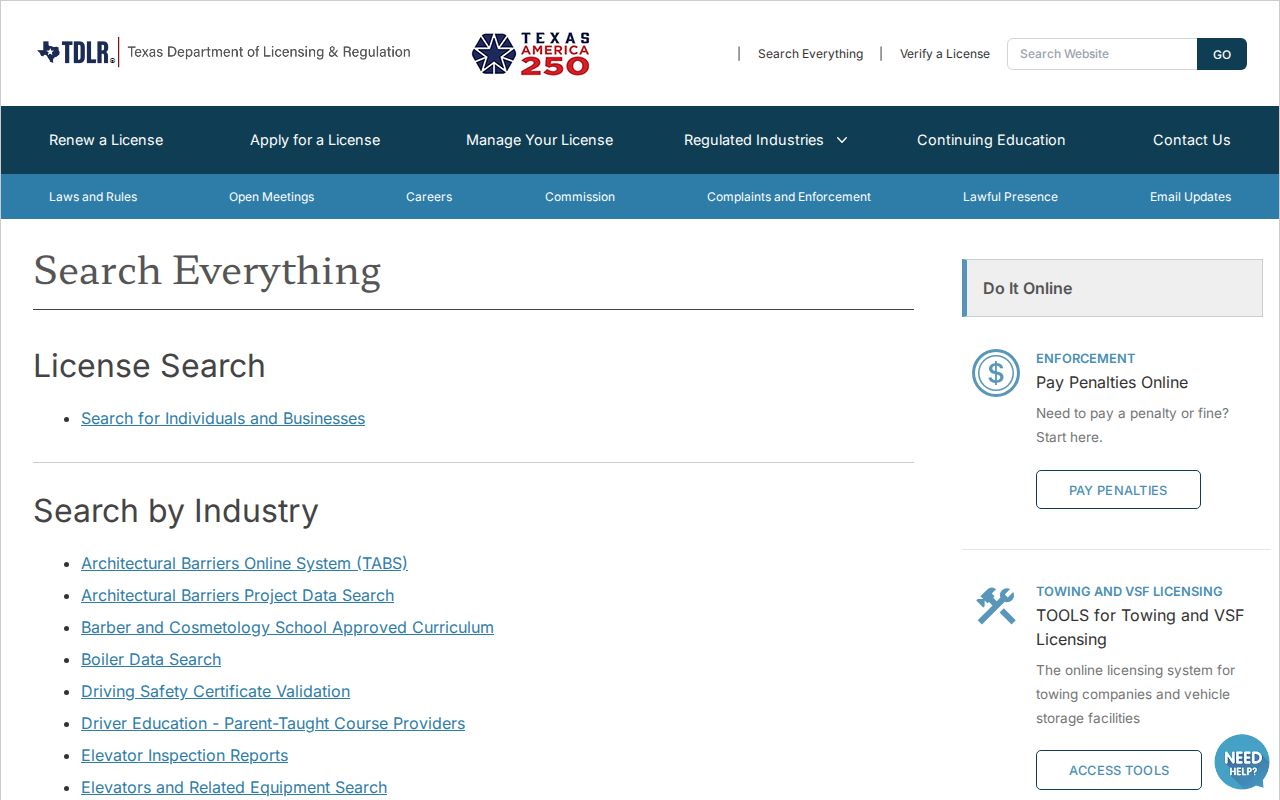
The state verification hub is built for checking a credential's status. It cannot prove that a license holder lives at a Sienna address. Pair it with a deed or parcel record for that.
Consult the Texas Education Agency certificate lookup page for official educator certificate status.
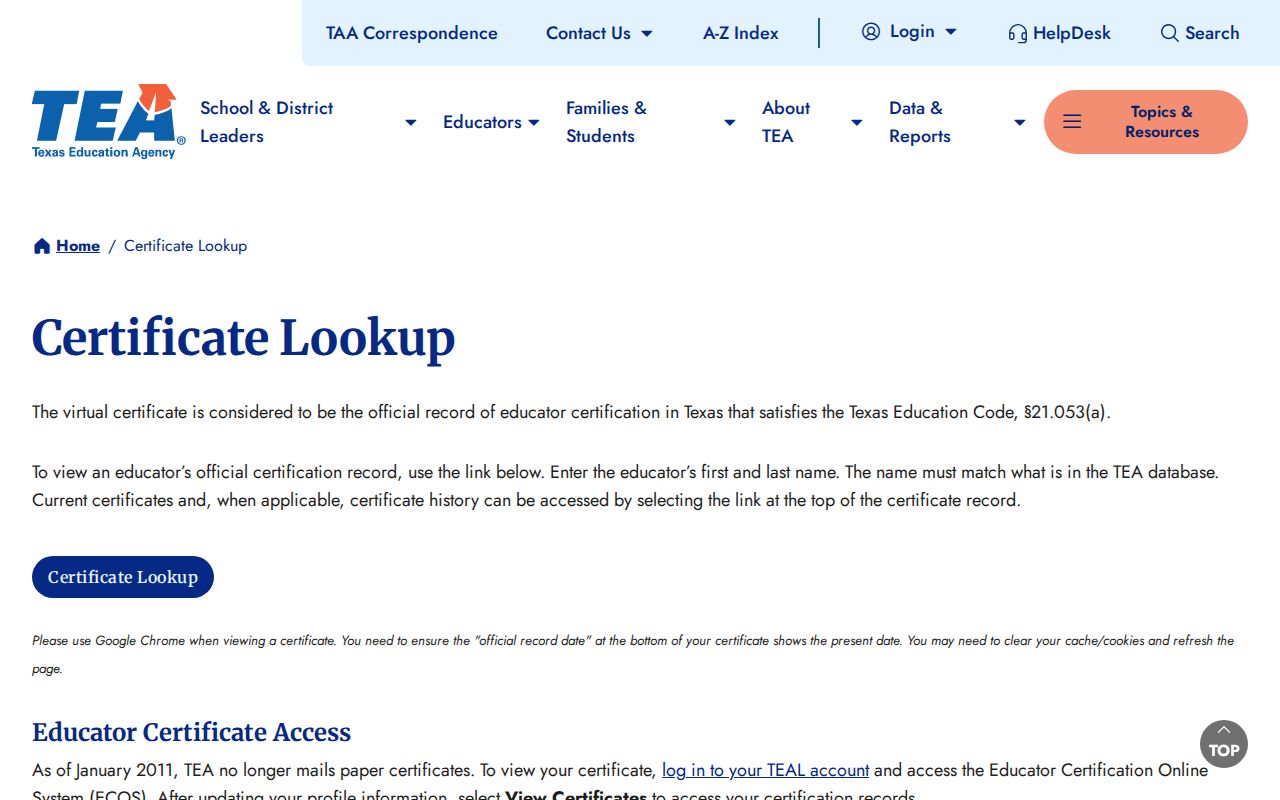
The educator result route is a credential check with its own status categories. It should be paired with a separate official identity anchor before any Sienna residency conclusion.
Use Texas SOSDirect for official business-identity filings tied to a Sienna name.
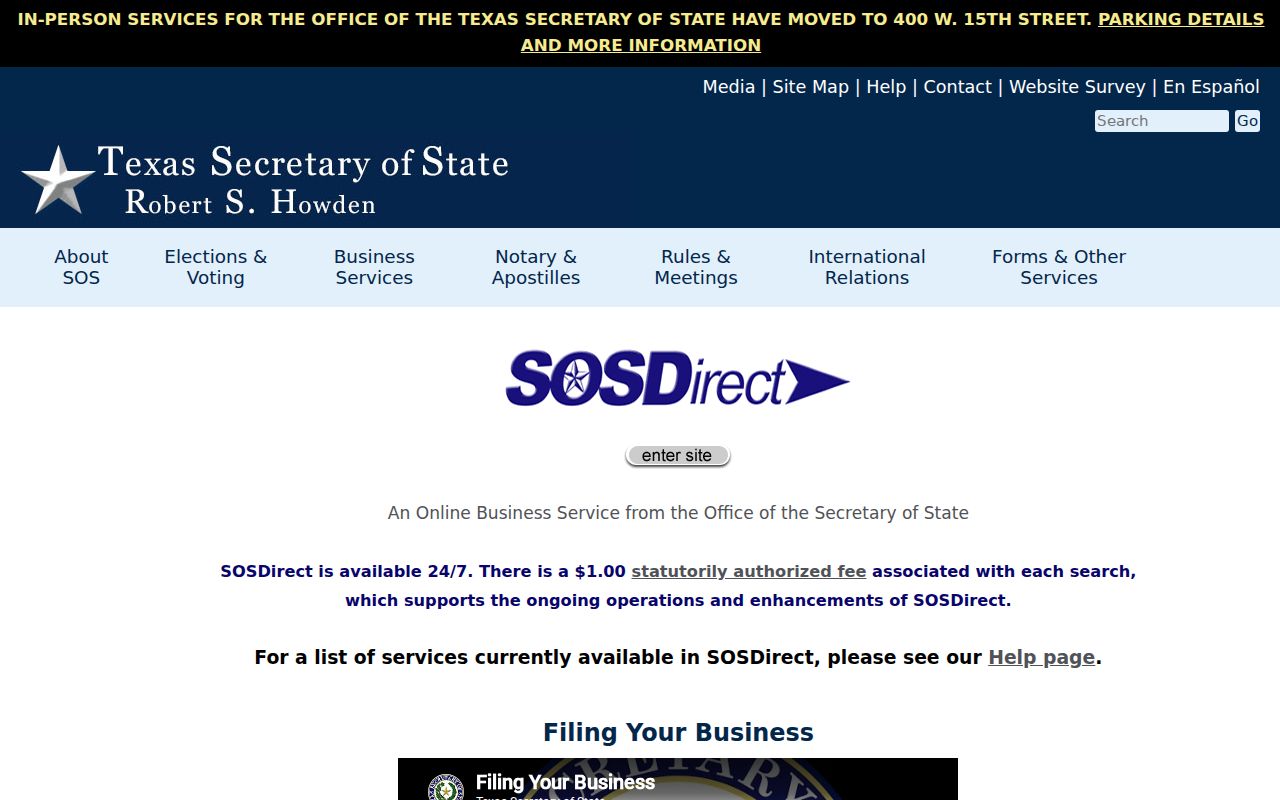
SOSDirect can connect a name to a filing history. For a Sienna parcel trail, the County Clerk and FBCAD remain the local sources of record.
Note: A filing, license, or registered-agent entry confirms an official role, not a person's current residence.
Sienna Records Act Fallback
A Sienna public portal may lack an image. It may not surface the record you need at all. The fallback is the Texas Public Information Act, Tex. Gov't Code ch. 552. Attorney General guidance directs a Sienna request to the governmental body that holds the record. Put the request in writing. Ask for existing material. Staff are not required to research or create an answer. Mail, email, hand delivery, and approved electronic methods are all valid Sienna request routes.
Keep the request narrow. Name the Sienna or Fort Bend County address. Give the record type, the instrument or case number if known, and a date range. Request electronic copies and an itemized estimate if charges will top $40. A governmental body should produce information promptly. If it cannot produce within ten business days, it must state the expected production date. The statute carries its own Attorney General ruling framework. Accept lawful redactions. No request can force an agency to assemble a resident list. Nor can it make an agency decide whether two people sharing a name are actually the same person.
Sienna Resident Lookup Privacy Limits
Privacy rules shape what a Sienna resident lookup can ever show. Texas gives certain survivors a substitute mailing address through the Attorney General's Address Confidentiality Program. Protected-voter rules can also suppress or replace residence information on the rolls. Government Code section 552.1175 and Texas Election Code protections extend to qualifying public officials, safety personnel, and military personnel. They also cover public defenders, higher-education officials, and covered family members. So a missing address in the residents directory may simply reflect confidentiality. It may not be an error. It could also stem from a spelling issue or a coverage gap. Either way, it is never a reason to reconstruct a protected location.
Voter records carry their own boundaries. Ballot choices stay private. Social Security numbers, driver-license numbers, and DPS identifiers are confidential by law. Treat any registration status as a time-stamped record. Treat any parcel result the same way. It is not a live fact. When a source is wrong, ask that custodian for its correction or amendment process. A deed problem may need a corrective instrument. A vital-record error may need an amendment. A court issue calls for the clerk or judge's own procedure.
Lawful use. A Sienna resident lookup is for personal, lawful research such as reconnecting, family history, civic questions, or checking a record trail. Do not use any result to stalk, harass, threaten, or intimidate another person.